Amorphous Boron Powder Properties
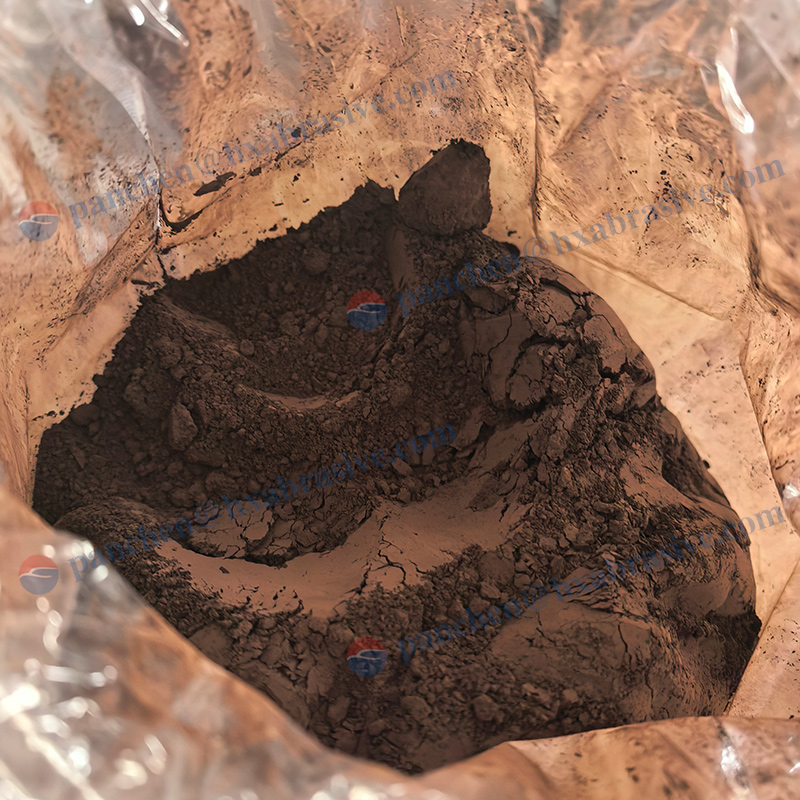
Amorphous Boron Powder is an amorphous elemental boron with no long-range ordered crystalline structure. It appears as a dark brown to black fine powder, and its properties differ significantly from crystalline boron.
1. Chemical Properties
High chemical reactivity: Due to its amorphous structure, it has a large specific surface area, resulting in much higher reactivity than crystalline boron. It readily participates in combination reactions, making it suitable for preparing borides and high-energy reagents.
Stable in dry air at room temperature; it begins to oxidize above 300℃, with an ignition temperature of 600-700℃ and a high calorific value.
Solubility: Insoluble in water, ethanol, and dilute acids; it only reacts with strong oxidizing acids such as hot concentrated nitric acid and hot concentrated sulfuric acid.
At high temperatures (>800℃, in an inert atmosphere), it undergoes a crystal transformation, gradually converting into crystalline boron.
2. Physical Properties
True density: 2.34-2.37 g/cm³; Mohs hardness: approximately 9-9.3.
The powder has low sphericity, consisting mostly of irregular, fine particles, and can be produced in submicron to 10μm particle sizes. It exhibits good dispersibility and is easily mixed into resins and ceramic matrices.
Boron-10 isotope is naturally occurring and possesses excellent thermal neutron absorption capabilities, making it suitable as a neutron shielding filler in the nuclear field.
3. Purity and Impurity Characteristics
Main industrial grades are 90-95%, 95-97%, and above 98%; common impurities include magnesium, water-soluble boron, moisture, and insoluble residues.
Higher purity results in fewer side reactions caused by impurities; 95-97% is the most cost-effective grade, balancing activity and cost.
4. Main Applications
- High-energy boron-containing agents and pyrotechnic agents.
- Metallurgical deoxidizers and alloy additives.
- Neutron absorbers and shielding composite fillers in the nuclear industry.
- Synthetic boronide ceramic raw materials such as titanium diboride.
- Preparation of various boron-based chemical intermediates.